

202 Airport Blvd
Doylestown, PA 18902
Phone 215-345-8222
Fax 215-345-7291
“Opt4 was absolutely fantastic to work with on our video conferencing project. With so many video conference products on the market today we were uncertain which solution would be right for us. Opt4 provided unbiased professional and technical guidance on all of the solutions and assisted us in making the best selection for our company. Their guidance saved us nearly 40%! The Opt4 implementation and support team are top notch!”
Joe Rukus – CTO Conner Strong Marlton, NJStructured Cabling
You need a well planned structured cabling system
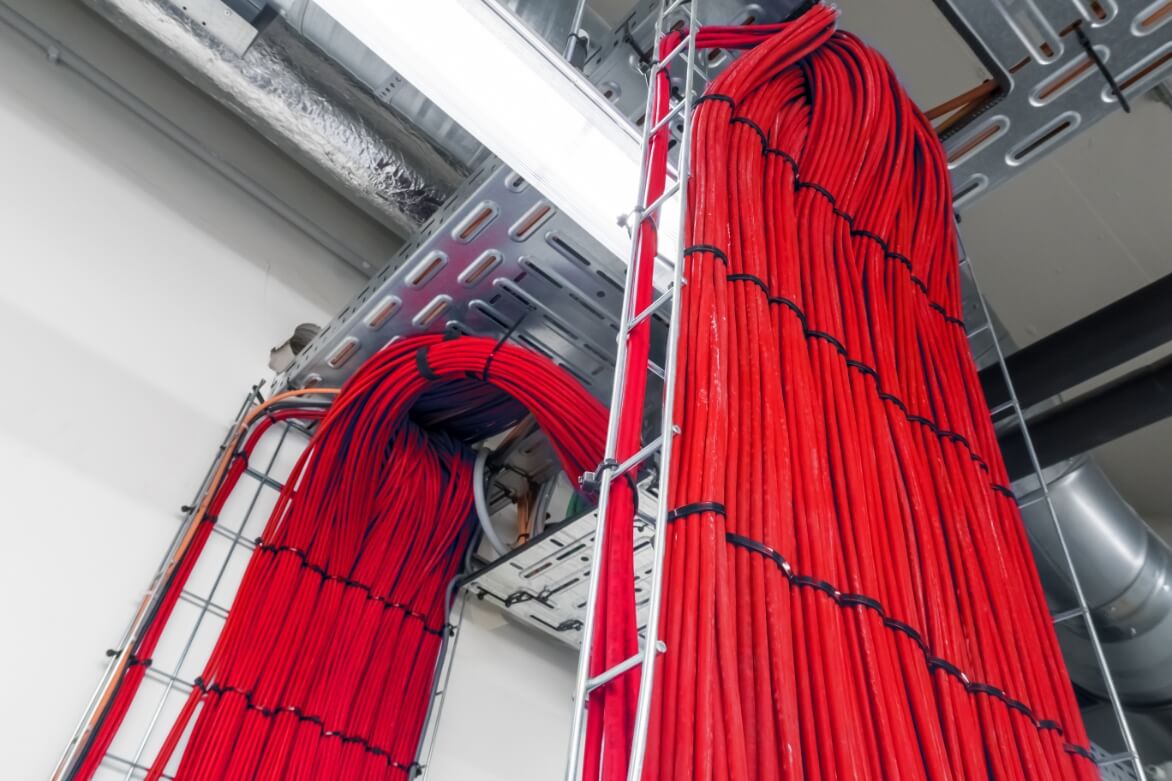
Communications among employees is essential to a successful business. Structured cabling systems are the core communications medium and their importance is often overlooked. Focus should be placed on performance and quality and not necessarily on the least expensive plan. Planning for the future and implementing a high-performing, name brand, quality structured cable system in accordance with industry standards will allow networking equipment and computer systems to perform to their potential.
Your data and voice wiring which is your cabling system has six subsystems in order for it to be classified as structured. First, it must contain entrance facilities which refer to the building interfaces, along with the equipment rooms that store equipment (servers, routers, switches, security systems, telecom equipment, phone systems, etc.). The telecommunication rooms, or closets, house mission-critical equipment and serve as a connection point to two cabling subsystems – the backbone cabling and the horizontal cabling. These two pieces tie the system together with the horizontal cabling connecting the telecommunication’s equipment to the workstation outlets. The work-area components connect the end-user equipment to the outlets coming from the horizontal cabling system. Patch cables are used to connect the users’ equipment (computers, phones, printers) to the work-area outlets. Patch cables should be less than 16 feet in length and are used to connect the network switches to the patch panels which are the termination point for the horizontal cabling. In addition to patch panels, network racks or cabinets can also contain fiber optic enclosures. These boxes protect the sensitive fiber optic strands from getting damaged at the termination points. The enclosures are also use to patch the fiber cables to GBICs or fiber optical media converters. All six components can be properly constructed according to industry standards and maintained individually for better organization.
Our network design engineer can recommend ways to maximize the structured cabling system’s configuration for today and for future equipment technology upgrades.
Some example recommendations that a network design engineer should make during construction planning are:
- Placing telecommunications IDFs in central locations in the office space to enable clean cable management.
- Telecommunications rooms: MDFs, IDFs and ER should be designed with a 20% to 30% expansion capacity to accommodate future equipment requirements.
- Planning for future equipment acquisition and business growth in facilities when designing pathways during new construction phases to efficiently plan for future cable installation.
- Recommend a high-performance cabling infrastructure system capable of supporting a variety of communications needs, including voice, data, video, electronic security, and building control. At a minimum, Category 5e cable should be installed. Category 6a and fiber optic cables provide the best ROI because they provide the ability to meet both current and future network communication performance requirements.
- When selecting a structured cabling system it is beneficial to get a performance certification that will cover the network’s actual delivery rather than simply the installation of specific products. Such a certification on a cabling infrastructure guarantees that a system installed today will perform at or above industry standards. It also ensures that new applications defined for the installation will work.
- Switches should be located in the center of server rows to enable simple and cost effective cable management as well as the efficient addition of equipment. It also shortens cable runs, which translates into cost savings up front and later when MACs (Moves, Adds, Changes) are required.
